
6 Kitchen Layout Ideas to Maximize Cabinets and Space
February 27, 2026
Planning a kitchen remodel is the perfect time to rethink your layout for maximum storage and efficiency.
A well-designed layout can dramatically increase how much cabinet space you have and make the kitchen more functional. The National Kitchen and Bath Association (NKBA) even recommends around 1,700 inches of shelf and drawer frontage for a medium-sized kitchen to ensure adequate storage capacity.
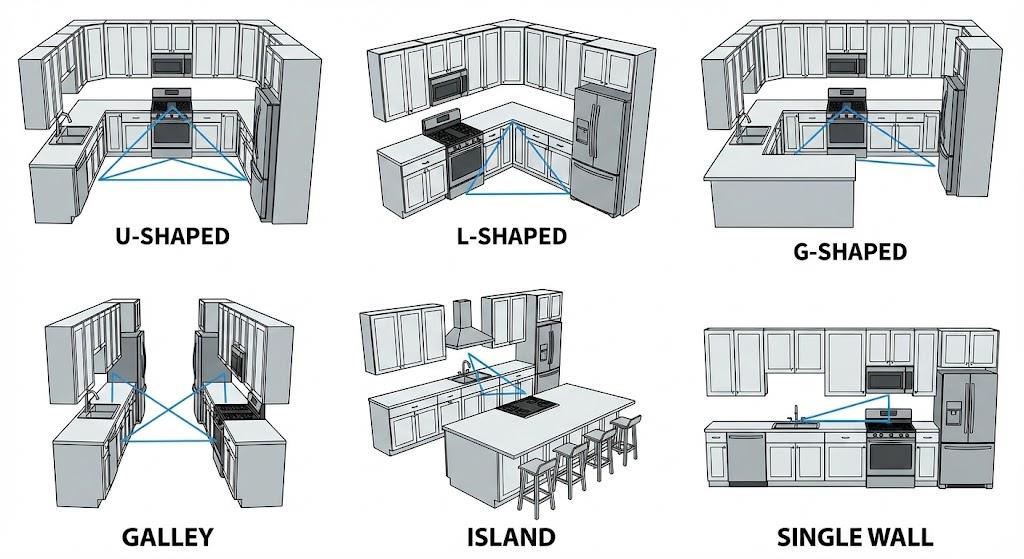
Below, we will explore the most effective kitchen layouts – U-shaped, L-shaped, G-shaped (peninsula), galley, island, and single-wall – with tips on design, current trends, organization strategies, and which kitchen sizes each suits best.
Single-Wall Kitchen Layout (One-Wall Kitchen)
The single-wall kitchen layout places all cabinets, appliances, and work surfaces along one wall.
This streamlined design is ideal for small homes, condos, or studio apartments where space is limited.
To maximize storage in a one-wall kitchen, think vertically: install extra-tall wall cabinets up to the ceiling and use open shelving in any gaps.
Most storage in this layout is vertical – overhead cabinets and shelves should hold as much as possible. It’s common to incorporate a mobile island or rolling cart for additional counter space when needed without permanently consuming floor space.
Organize the wall efficiently by grouping the fridge, sink, and stove in a sensible order (for example, sink in the center) to create a modest workflow zone. While a one-wall kitchen naturally feels open and airy, be mindful that it has fewer cabinets than other layouts – every inch counts.
Utilize wall-mounted racks for spices, magnetic strips for knives, or pegboards for pots to free up cabinet space. This layout is most suitable for small kitchens or open-plan living areas, and it offers a modern, minimalist look. If square footage allows, you can also add a small island in front of the one-wall setup to mimic a galley style and gain more cabinets and seating.
Galley Kitchen Layout
A galley kitchen (also known as a corridor kitchen) features two parallel runs of cabinets and countertops forming a narrow walkway in between.
This layout is highly efficient for small and medium kitchens, as it makes excellent use of limited width. With two opposing walls of cabinetry, you get ample storage opportunities; however, it’s crucial to maintain at least 3–4 feet of aisle width for safe and comfortable movement.
In tight spaces, concentrate major work zones on one side to avoid traffic crossing the aisle during cooking. For instance, you might place the range and sink on one wall and the refrigerator on the opposite end, keeping the workflow triangle compact.
Vertical storage is still important: extend upper cabinets to the ceiling and use the tops of cabinets (with decor baskets or bins) if necessary. Good lighting and light-colored finishes can prevent a galley kitchen from feeling cramped. As for organizational strategies, equip your base cabinets with pull-out shelves or drawers so you can reach the back of the cabinets easily – crucial in a narrow galley where accessing deep recesses is tough.
Many homeowners with galley kitchens remove the upper cabinets on one side or install a passthrough opening if possible, to create a more open feel toward an adjacent room. While the galley layout is a classic (found in many older homes and apartments), current trends often favor more open layouts. Still, galley kitchens remain popular for small-footprint homes because they maximize cabinet and counter space in a confined area.
L-Shaped Kitchen Layout
The L-shaped kitchen layout consists of cabinets along two perpendicular walls, forming an “L” shape.
This versatile design works well for medium-sized kitchens or open floor plans where one part of the kitchen opens to a dining or living area.
An L-shaped layout offers generous storage and counter space while keeping two sides open for traffic flow. To avoid wasting the corner space where the two legs of the “L” meet, install a smart corner cabinet solution – for example, a Lazy Susan turntable or pull-out corner shelves – so that every inch of the corner cabinet is accessible. You can also use the corner area for a diagonal sink or range to make it a focal point, though that can limit base cabinet storage.
One big advantage of an L-shape is the flexibility to add an island if floor space allows, effectively creating additional cabinets and a central workspace for prepping or gathering. In smaller kitchens, the L layout provides an open, roomy feel compared to a U-shape, since it doesn’t enclose the space. Place your refrigerator at one end of the L and your range or cooktop along the other leg for an efficient work triangle.
Design-wise, L-kitchens are highly popular in contemporary homes because they naturally facilitate an open concept – one side of the kitchen can face the living area, allowing for bar seating or a window pass-through. Current trends often pair L-shaped layouts with a peninsula or island (creating a “G” or a horseshoe) to increase storage and entertainment space. If your kitchen is on the smaller side, stick to the pure L configuration without an island, and use wall space wisely (tall pantry cabinets at the end of an L leg can add a lot of storage). For larger spaces, a spacious L-kitchen with an island becomes a multi-zone cooking and socializing hub.
U-Shaped Kitchen Layout
A U-shaped kitchen (horseshoe layout) features three walls (or two walls plus a peninsula) of cabinets and counters wrapping around the cook. This layout maximizes cabinet storage and counter area by utilizing three sides of the room.
It’s ideal for those who need lots of storage and workspace – for example, families who cook frequently or have bulky cookware. In a large kitchen, a U-shape creates an efficient work triangle and keeps everything within reach.
However, in a smaller kitchen, a U-shaped design can feel a bit enclosed or tight. To keep a smaller U-shaped kitchen from feeling boxed in, consider using open shelving or glass-front upper cabinets on one or two sides instead of solid cabinet boxes. This preserves storage but makes the space feel lighter and more open.
Another tip is to maintain adequate center aisle width (at least 4 to 5 feet) so you can comfortably move about and open cabinets without obstruction. Like the L-shape, the U-shape has corner cabinets on both ends – outfit those corners with pull-out carousels or corner drawers to avoid dead space.
Modern design trends sometimes convert one leg of the U into a peninsula or breakfast bar, opening up the layout to an adjoining room for a more social feel. You might, for instance, leave the upper cabinets off the peninsula side and instead have bar seating there, turning the U into a functional G-shape.
Overall, U-shaped kitchens are best suited for medium to large kitchens where you want an abundance of cabinets. They provide an efficient, wrap-around workspace for serious cooking, and you can always remove a section of uppers to create a pass-through if you crave more openness.
G-Shaped Kitchen Layout (Peninsula Kitchen)
The G-shaped layout is essentially a U-shaped kitchen with an added peninsula that extends from one of the U’s sides, creating a partial fourth wall (hence the “G” shape). This design gives you even more cabinetry and countertop space by adding an attached island-like extension.
G-shaped kitchens are great for medium to large kitchens, especially if you want the benefits of an island but don’t have space for a free-standing island in the center. A peninsula can provide extra base cabinets and seating without requiring the clearance space that a separate island would. In fact, a peninsula layout is ideal for kitchens that want an island feel but lack room for a stand-alone island. The peninsula often serves as a casual dining counter or serving area, effectively dividing the kitchen from an adjacent breakfast nook or living room.
When planning a G-shaped kitchen, make sure to keep the entry area into the kitchen open and wide enough (no less than a standard doorway, around 32 inches or more) so the space doesn’t feel blocked off. Design tips for peninsulas include using the outer side for bar stool seating or open shelves for display, since the inner side already provides cabinet storage. Be mindful of the corner where the peninsula meets the rest of the kitchen – this juncture can be another hard-to-reach spot; utilizing a diagonal cabinet or a bifold hinge door can help access that corner storage.
Trends have shifted toward favoring islands in open-plan spaces, but peninsulas are still very popular in layouts where an attached counter makes sense (for instance, in a semi-open concept where the kitchen opens to another room but retains a bit of separation).
A G-shaped kitchen truly excels at maximizing cabinets and counter area, but it’s best used in a space that isn’t too small, otherwise it could feel constricting. If your kitchen is medium-sized, a G layout can pack in storage while still feeling connected to the next room via the peninsula opening.
Kitchen Layouts with an Island
Incorporating an island is one of the most effective ways to add storage and functionality to a kitchen, provided you have the space. An island isn’t a layout by itself; rather, it complements layouts like L-shaped, U-shaped, or even single-wall kitchens by introducing a freestanding workspace in the center. Islands are extremely popular in today’s kitchen designs – in fact, about 42% of homeowners opt for kitchen islands at least 7 feet long during remodels to maximize both utility and visual impact.
An island can house additional base cabinets (great for storing large pots, pans, and small appliances), plus it offers more countertop surface for food prep or buffet-style serving. Many islands also double as an eating area or homework spot, so consider an overhang on one side for barstools. If you have a large kitchen, you might even plan a double island for specialized uses (e.g. one for cooking, one for dining), a trend in high-end kitchens.
For most homes, a single island will suffice – just ensure there’s enough clearance (ideally 42–48 inches on each side of the island) so that appliance doors can open and multiple people can move around comfortably.
Oftentimes the island is treated as a focal point or a feature piece – for example, using a contrasting cabinet color or a decorative waterfall countertop to make it stand out. From an organizational standpoint, equip your island with efficient storage solutions: deep drawers for cookware, pull-out trash and recycling bins, or even built-in wine racks or bookshelves on the ends. If your kitchen is small, you might opt for a portable island cart or a narrow peninsula instead, since a full island requires ample space.
But in any kitchen that’s medium to large, adding an island is a top way to increase cabinet space and create a social center in the room. Islands continue to dominate kitchen wish-lists, aligning with the modern preference for open, multi-functional kitchen spaces.
Maximizing Kitchen Space in Any Layout
No matter which kitchen layout you choose, the key to maximizing space is thoughtful planning and smart use of cabinetry. Incorporating specialized storage solutions will make a significant difference.
At Discount House in Wilmington , we offer a wide selection of high-quality yet affordable kitchen cabinets to suit any layout or style. Matching your layout with the right cabinets – whether it’s sleek modern flat-panel doors for a contemporary open-plan kitchen or classic shaker cabinets for a cozy U-shaped design – will ensure your new kitchen is both beautiful and space-efficient.
Planning a kitchen remodel? For more tips on designing your space (and keeping costs under control), check out our guide on renovating your kitchen on a budget. And when you’re ready, feel free to give us a call or visit our showroom – the team at Discount House Wilmington can assist you in choosing the perfect cabinets and layout to maximize every inch of your kitchen.
