
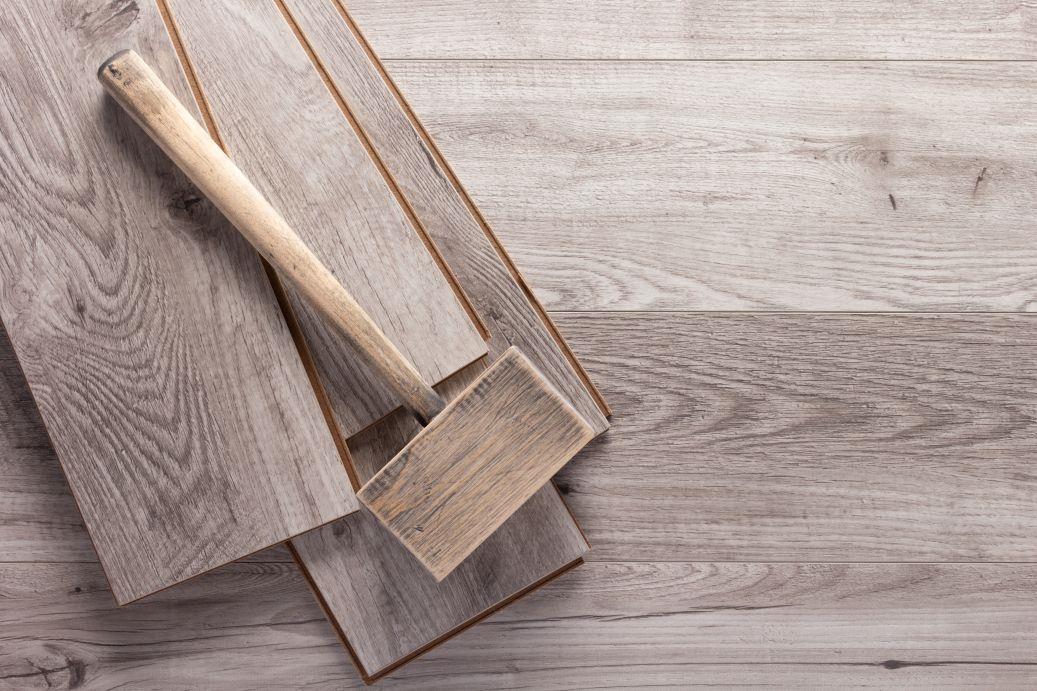
Luxury Vinyl Plank vs. Laminate Flooring: Which Is Right for Your Home?
July 20, 2026
If you're in the middle of a flooring decision and you've narrowed it down to luxury vinyl plank or laminate, you're probably realizing these two options look similar on paper but feel very different once you start digging in.
Both mimic the look of hardwood. Both are affordable compared to real wood. Both install as floating floors without glue or nails. But how they hold up in your actual home depends almost entirely on what that home is like and what you're putting them through.
In this blog we'll walk through what actually separates these two floors and help you figure out which one belongs in your space.
Why the Materials Behind Each Floor Matter More Than You Think
This part matters more than most people think, because the way a floor performs over time comes directly from its construction.
Luxury vinyl plank, or LVP, is a fully synthetic floor. It's built from vinyl layers with a rigid core in the middle, topped with a photographic wood-look image and a protective wear layer over that. Because the whole thing is vinyl, it doesn't absorb water. Spills, humidity, and steam aren't going to compromise the floor structurally.
Laminate is different. It's made from wood-based composite materials pressed into layers, with a photographic image on top that mimics wood grain. That composite core handles a lot, but it's still wood-derived, which means it can swell if moisture gets in and stays there.
That one difference explains most of what separates these two floors in real-world use.
How Wilmington's Climate Should Drive Your Flooring Decision
If you live anywhere near the coast, this is the section to pay closest attention to.
Wilmington', NCs climate is not forgiving to materials that can't handle humidity. Indoor humidity ideally stays between 30% and 50%, but in a coastal home, especially through the summer, it can push well above that. Add sandy shoes tracked in from the beach, a bathroom that gets steamy every morning, or a kitchen where spills happen daily, and you've got conditions that will expose the weaknesses in a floor that isn't up to the job.
LVP handles all of that well. Most quality products are fully waterproof, which makes them a strong fit for kitchens, bathrooms, laundry rooms, mudrooms, basements, and entryways. If your home sits close to the water or you run with the windows open most of the year, LVP is going to give you a lot less to worry about.
Laminate has improved significantly over the years. Some newer products are labeled water-resistant or even waterproof, which is a real step forward from older laminate that would buckle after a wet towel sat on it too long. But standard laminate is still more vulnerable to standing water and prolonged moisture than LVP. In a dry bedroom or a climate-controlled hallway that's far from any plumbing, that usually isn't a problem. In a bathroom or a below-grade space in coastal North Carolina, it's a real risk worth taking seriously.
If you're weighing flooring for a room with any meaningful moisture exposure, LVP is the safer call. If the room stays consistently dry, laminate becomes a much more competitive option. We cover this in more depth in our blog on the best flood-resistant flooring options for coastal homes if you want to go deeper on that topic.
Which Floor Holds Up Better Under Real Daily Use
Both floors are durable. They just hold up differently depending on what you're putting them through.
Laminate tends to have the edge on scratch resistance. The wear layer on a good laminate floor is quite hard, which helps it stand up to pet nails, dragged furniture, and heavy traffic without showing a lot of surface wear. If you have a large dog who's always skidding around, laminate in a dry room is going to look better longer than some comparable LVP products.
LVP is generally softer underfoot, which is a comfort advantage, but it can be more susceptible to denting under heavy furniture or sharp point pressure. That said, product quality matters a lot here. A higher-grade LVP with a thicker wear layer will outperform a budget laminate on almost every measure.
Neither floor can be refinished the way hardwood can. Once the wear layer is gone or moisture damage sets in, you're replacing the floor, not sanding it down and starting over. Quality LVP typically runs around 20 to 30 years, while good laminate is usually in the 15 to 25 year range. Cheaper products in either category will fall short of those numbers.
If you are interested in hardwood vs. vinyl flooring, check out our blog.
The Difference You'll Actually Feel Underfoot Every Day
This is where LVP tends to win over people who've been on the fence.
LVP is softer and quieter underfoot than laminate. In a busy household, that difference is noticeable by the end of the day. Laminate can have a hollow, echoing quality that some people find hard to live with long-term. Using the right underlayment helps with this, but it doesn't fully close the gap.
For cleaning, both floors are straightforward, but LVP is more forgiving. You can wipe it down freely without worrying about water working its way into the seams. Laminate requires a little more care. Damp mopping is fine, but soaking it is not. For families with young kids, pet owners, or anyone who just doesn't want to think twice before cleaning up a mess, that tolerance for everyday life is a real advantage.
How Close Does Each Floor Get to the Real Wood Look
A few years ago, laminate had a clear edge here. The texture and grain detail on a good laminate floor was more convincing than most LVP, and you could tell the difference if you looked closely.
That gap has closed considerably. Today's LVP products, especially in the mid-to-upper price range, are genuinely impressive. The embossing, the depth of color, and the plank-to-plank variation have all improved to the point where most people can't tell the difference without getting on their hands and knees.
Laminate still has a slight edge in some products for the sharpest, most detailed wood-grain reproduction. If you're working in a room where you want the richest possible hardwood feel and moisture isn't a factor, that can matter. But if you're choosing LVP for practical reasons and worried you'll be giving up aesthetics, that's largely not the case with today's options.
What You Should Actually Expect to Spend on Each Option
The old rule of thumb that laminate is always cheaper isn't as reliable as it used to be. Pricing on both materials has converged, and in many cases you'll find LVP and laminate at similar price points across good, better, and best tiers.
What matters more than the category is the quality level within it. A mid-grade LVP will outperform a budget laminate in most conditions, and the same is true in reverse. Rather than choosing based on which material is cheaper in the abstract, it's worth looking at what's actually available in your price range and comparing products directly.
Resale value is also worth factoring in, especially if you're renovating a rental or planning to sell. A moisture-resistant floor in a kitchen or a coastal home can be a genuine asset. A beautiful laminate floor that swells within two years because it wasn't the right match for the room is a liability. If you're managing rental properties or trying to stretch a renovation budget, our posts on the best countertops for rental properties and 7 ways to save money on your kitchen remodel cover similar thinking across other materials.
The Best Rooms for LVP vs. Laminate in Your Home
Here's a straightforward way to think about it by room.
Choose LVP for kitchens, bathrooms, laundry rooms, basements, mudrooms, entryways, and any space in a home with high humidity or regular moisture exposure. If you have pets or kids and spills are just part of daily life, LVP is going to be easier to live with throughout most of the house. Our best bathroom flooring options post goes deeper on that specific room if a bathroom is where you're starting.
Choose laminate for bedrooms, living rooms, dining rooms, and hallways where the room stays consistently dry and scratch resistance and a sharp wood-look finish are your top priorities.
If you're not sure which category your room falls into, ask yourself whether the space has ever had moisture issues, whether it's near a bathroom or kitchen, and how quickly you realistically clean up spills. If any of that gives you pause, LVP is the lower-risk choice.
LVP or Laminate: How to Make the Final Call
It depends on how you live and where you're installing it.
For most Wilmington homes, LVP is the safer all-around pick. The coastal climate, the humidity levels, and the way most people actually use their spaces all favor a floor that handles moisture without drama. If you're flooring a kitchen, a bathroom, or a home that sees real humidity through the seasons, LVP is what we'd point you toward.
That said, laminate isn't a compromise. In a dry bedroom, a low-traffic living room, or a space where you want the sharpest possible hardwood look and you know moisture genuinely isn't a factor, laminate earns its place. It's a good floor. It just performs best when you put it in the right room.
The decision comes down to where you're installing it, what your household looks like, and how honest you can be about moisture risk. Answer those three things clearly and the right material usually becomes obvious
If you are in Wilmington, NC be sure to stop by Discount House and spend a few minutes with the actual products. Seeing the finish in person, feeling the thickness underfoot, and comparing options side by side will tell you more than any article can.
We've been helping Wilmington homeowners, landlords, and contractors make these decisions since 1986. Our team is happy to walk you through what we have in stock, talk through your specific room, and help you find something that fits your budget and holds up in your home. You can also browse our flooring selection online to get a sense of what's available, or just stop by the showroom and we’d be happy to help any way we can.
